
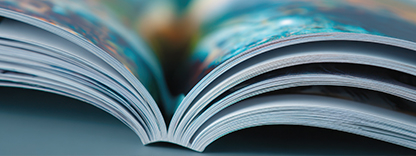
What is Glue or Perfect Binding in Printing?
Books, novels, softcover paperbacks, catalogues, annual reports, brochures, and virtually any multi-page print project all require some form of binding to keep pages together in a structured, professional format. A well-bound book not only holds pages securely but also creates a clean, attractive spine.
This is where glue binding—also known as perfect binding—comes in. It is one of the most common, cost-effective, and versatile forms of binding used in the printing industry.

So, how is perfect binding done?
Once pages are printed, they are folded into sections and gathered in the correct sequence to form what is known as a book block.
The cover is then scored to allow it to open smoothly without cracking.
The book block is fed into a specialised binding machine, where the spine is ground to expose the paper fibres. This process ensures optimal glue penetration and adhesion. Glue is then applied to the spine, and the cover is wrapped around and clamped into place.
Once bound, the book is trimmed on three sides to produce a neat, clean, and professional finish.
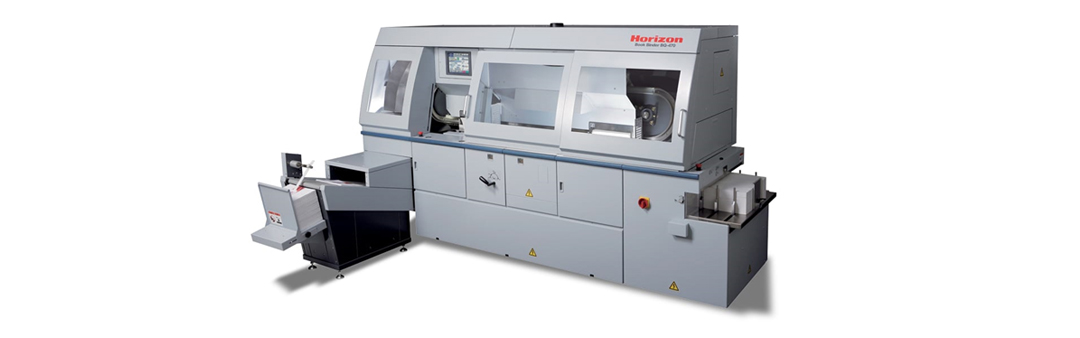
What is the difference between PUR and Perfect Binding?
There is often confusion between PUR binding and perfect binding, but they are closely related.
Perfect binding refers to the method of binding (gluing pages to a cover), while PUR refers to a type of adhesive used in the process. In most perfect binding EVA glue or Hotmelt adhesive is used.
Traditionally, PUR (Polyurethane Reactive) glue has been known for its superior strength and durability. However, advancements in EVA (hotmelt) glue technology have significantly closed the gap.
EVA glue is now widely used due to its fast-setting properties, allowing books to be trimmed and dispatched almost immediately after binding. In contrast, PUR requires approximately 24 hours to fully cure before trimming.
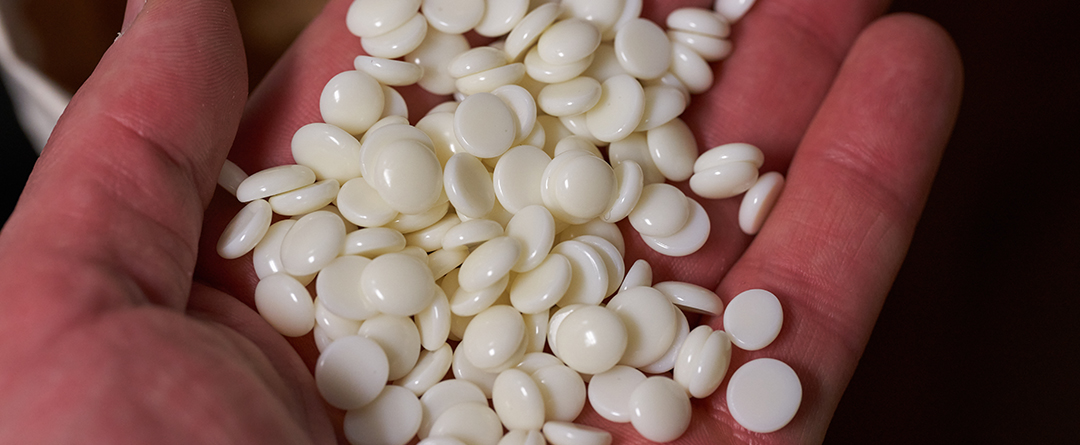
PUR remains the preferred choice for:
- Very thick books
- Publications printed on coated stocks
- Projects requiring maximum durability
Is there a benefit to Perfect Binding?
Perfect binding offers several key advantages:
- Creates a clean, square spine for a professional finish
- Allows for spine printing (titles, branding, etc.)
- Ideal for high page-count documents
- Delivers a true “book-like” reading experience
A well-designed cover combined with perfect binding not only protects the content but also enhances its visual appeal, encouraging engagement from the reader.
Summary
Books, novels, softcover paperbacks, catalogues, and manuals all require durable, long-lasting binding—and perfect binding remains one of the most effective solutions.
Clients value the square spine and premium finish, which elevates the overall look and usability of the final product. It’s no surprise that perfect binding continues to be one of the most widely used binding methods across publishing, education, and commercial print sectors.
Your Next Book Project
Remata Communications and Printers have years of experience producing high-quality print for the South African market and beyond. With full in-house capabilities, your books, novels, paperbacks, and other print projects are in skilled and capable hands.
We partner with a wide range of advertising agencies, print brokers, and leading brands across both print and packaging.
You design it, we print it.
It’s clear why Remata is regarded as a trusted partner in commercial printing and packaging—delivering reliability, quality, and scale across every project.
Call: 011 848 0000
Email: [email protected]
Visit: www.remata.co.za
Our experienced team is ready to partner with you on your next print or packaging project.