Pages, Leaves & Page Counts in Printing
Whether you’re involved in any kind of printing that involves more than 4 pages you will be looking to add folios. Whether its book publishing or magazine production, understanding the intricacies of numbers in print in important. We will try make it as simple as possible so that you never have to make the mistakes of others.
Understanding Pages and Leaves
What is a Page?
A page is a single side of a leaf, typically containing text, images, or a combination of both. It is the basic unit of content in a printed publication.
What is a Leaf?
In printing terminology, a leaf consists of two pages printed back-to-back. It’s the sheet carrying a page on either side.
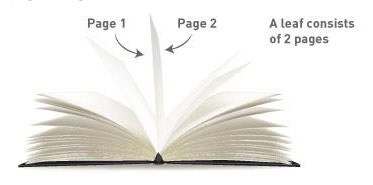
Understanding what a leaf and page is in printing directly affects the page count of a printed publication. Many times Printers are asked to quote on leaves only to find out later the client meant to say pages.
Having a clear understanding of pages and leaves is essential for several reasons:
1. Accurate Print Estimates
By knowing the distinction between pages and leaves, printers can accurately estimate the paper required for a project. This ensures that clients receive accurate quotes, preventing any surprises or unexpected costs down the line.
2. Efficient Printing Process
It further streamlines the printing process, allowing printers to organize the job efficiently. It helps in determining the correct order of pages, ensuring that they are printed and assembled in the correct sequence.
3. Minimizes Wastage
A key factor in printing is having the correct number of pages (page count) to fill a printer’s section (sheet) so no unwanted blank white pages are in the publication that you end up paying for and looks unsightly.
Printers Page Count?
Multiples of Two or Four
Litho Printing jobs that have multiple pages, are often planned in multiples of four due to the way books are folded and bound. This means that the page count will start at 4 moving on to 8, then 12, then 16, and so on. Commonly called an “even” page count. Binding methods commonly used in the printing industry, such as saddle stitching and perfect binding, require pages to be added in groups of four. This applied to Perfect Bound, Saddle Stitched and Casebound books. Wire or Coil bound books only require groups of 2 as well as low run quantity jobs printed on a Digital Press.
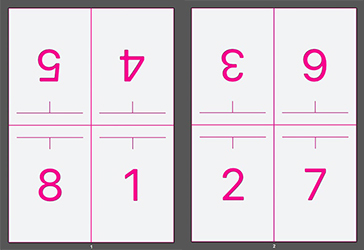
An example of an 8-page document printed 4 pages on the front of the sheet and 4 pages on the back. When folded, put together, saddle stitched and trimmed, you have an 8-page brochure.
Adding Covers, Index Pages or intentional blank pages
In addition to the main content or inside pages, a printed publication may include covers or other pages like index pages. These additional pages must be considered when determining the total page count of a project. So, if for example your inside numbered pages are 144 pages but before these pages you have also added 4 unnumbered index pages, the count is now 148 pages. In the same manner, should the Cover be on a different paper thickness that should be counted separately as a 4 pager (Outside Front, Outside Back, Inside Front, Inside Back). Should The Cover be on exactly the same stock then the Cover 4 pages get added to the inside count.
So the next time you embark on a printing project, be sure to consider the pages and leaves to achieve the desired outcome!
Contact us if you have any questions: Remata – 011 848 0000