
What Is a Book Spine? How to measure it and choose the right Binding
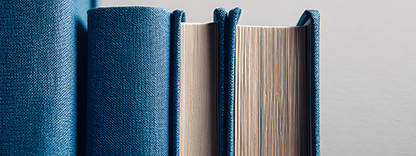
Let’s keep this simple: the spine is the edge of a book where all the pages are held together. It’s the part you see on a shelf (where the title usually goes), and it’s also the “backbone” that stops pages from falling out.
What the spine does (in plain language)
- Holds everything together: it’s where the pages are attached.
- Protects the pages: a good spine helps the book handle opening and closing again and again.
- Makes the book look like a book: if it’s thick enough, the spine gives you space for a title and name.
Why spine size matters
The spine isn’t a “design choice” you guess. The thickness of your paper (and how many pages you have) decides how thick the spine will be. And that spine thickness then helps decide the best binding method.

How to measure a spine (the easy way)
You’re basically trying to find out how thick the finished stack of pages will be.
- Know your page count: count the inside pages (not the cover).
- Know your paper: thicker paper = thicker spine. (Two books with the same number of pages can have different spine widths if the paper is different (eg: one is 115gsm and the other 130gsm.)
- Get the paper thickness from your printer: most print providers can tell you the thickness of that paper stock.
- Do a quick calculation: (number of pages ÷ 2) × paper thickness. Why ÷ 2? Because one sheet of paper is two pages (front and back).
- Best tip of all: if you can, ask your printer for a quick mock-up (a stacked sample). It’s the easiest way to avoid surprises or they will have basic calculations that can give you a good idea of spine widths.
Spine thickness helps choose the binding
Here’s the practical rule of thumb:
- Very few pages: these are usually saddle stitched (folded and stapled). Think small booklets, short brochures, simple newsletters.
- Multiple pages (manuals, catalogues, company books): these are usually glue bound (often called perfect bound) or PUR bound. PUR is a stronger, more flexible glue option that’s great when you want better durability.
- Very, very thick publications (500+ pages depending totally on the paper weight): section sewing is usually preferred. It’s built for heavy page counts and repeated use.

One quick example
Say you’re printing a catalogue and you change the paper to a thicker stock because it feels more premium. Great choice—but now the spine gets thicker too, which can change the cover layout and push you toward a different binding method. That’s why paper choice and binding choice go together.
Printing is a science—get the right help
Printing looks simple from the outside, but it’s a mix of measurements, materials, and experience. That’s why it’s smart to trust reliable, professional, qualified print providers like Remata. They’ll guide you on paper, spine width, and the best binding method—so your project comes out clean, strong, and exactly how you imagined it.